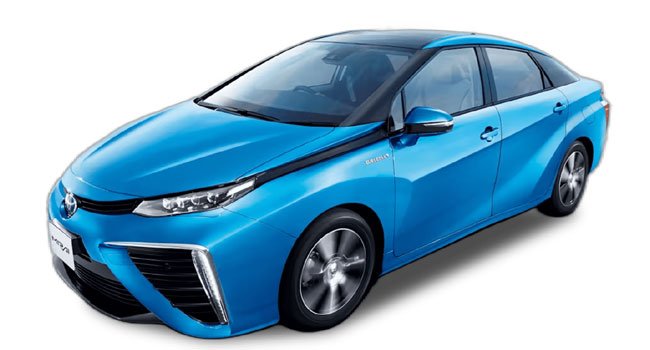
There isn’t anything else on the road like the 2024 Toyota Mirai. Rather than being powered by gas or electricity, the Mirai uses a hydrogen fuel cell. An electric motor powers the rear wheels, but it’s supplied by a fuel cell instead of a battery. There are several upsides to this powertrain. Hydrogen fuel cell vehicles emit only water and can easily be refilled at a hydrogen station in a relatively short time. It’s not as quick as filling a car with a tank of gas, but it takes far less time than charging an EV’s battery. From behind the wheel, the Mirai also drives like a regular electric vehicle, though few EVs can match the Mirai’s EPA-estimated 402 miles of range.
The Hyundai Nexo also uses a hydrogen fuel cell, but it’s an SUV rather than a sedan. EVs in the price range include the Hyundai Ioniq 5 and Ford Mustang Mach-E, both of which are available in more than just a couple of states. Wearing one of Toyota’s most beautiful designs, the 2024 Mirai sedan looks like it rolled straight out of a future where boxy SUVs are so passé. Its flowing lines and upscale appearance distract from its true party piece, which is its hydrogen-powered propulsion system. Acceleration is leisurely from the onboard electric motor, but the Mirai is a zero-emission option that lets drivers refuel in mere minutes rather than waiting around at an EV charger. The interior is posh, its ride is forgiving, and handling is unexpectedly lively, but the Mirai can’t venture too far away from areas where hydrogen fueling stations are available. For that reason, the Mirai–as well as its chief rival, the Hyundai Nexo—is currently sold only in California. The Mirai is offered in either the base XLE trim or the loaded Limited guise, but we’d stick with the less expensive of the two. Standard interior features include heated and power-adjustable seats, keyless entry and ignition, faux-leather upholstery, and a 12.3-inch infotainment touchscreen.
There would also be the opportunity to drive the company’s range of “electrified” offerings and hear a long and detailed overview of Toyota’s strategy for becoming a carbon-neutral company. I got to ask some questions, get some answers, poke around in the pre-production bZ4x’s that were on hand, and drive a few interesting cars.
Toyota claims the Mirai requires a leisurely 9.1-seconds to reach 60 mph, the immediate nature of the electric motor’s power delivery makes it feel perkier than that when driving around town. Likewise, the rear-wheel drive chassis delivers a surprising level of athleticism while preserving a refined and composed ride. The EPA hasn’t released estimates for the Mirai’s fuel economy yet, but the previous generation model earned ratings of 67 MPGe for both city and highway driving. The more frugal of the two Nexo models come in at 65 MPGe city and 58 mpg highway. According to Toyota, the 2021 Mirai is good for up to 402 miles per fill-up of hydrogen.
The 2024 Mirai boasts a snazzy cabin that matches its swoopy exterior. Copper-colored trim pieces highlight several curvy elements on the dash and door panels while the nearly all-digital instruments and large infotainment screen dominate the upper part of the dashboard. The more expensive Limited trim brings even more niceties than the standard XLE, including a moonroof, heated-and-ventilated front, and rear seats, three-zone automatic climate control, and more.
2024 Toyota Mirai limited is a fuel cell vehicle that runs on hydrogen. It has many advantages over traditional gasoline vehicles. Some advantages of the Mirai include its long range, fast refueling, and low emissions
The next morning we were treated to a presentation that was a detailed history of Toyota’s low-carbon efforts as well as a roadmap of where the company is headed. Some may be critical of Toyota’s green initiatives, its EV program in particular, and Toyota’s corporate voice was unapologetic. Most consumers don’t know much about "electrified" (Toyota considers any vehicle with a traction battery and electric drive motor an electric vehicle and claims it’s the number-one manufacturer of electric powertrains) vehicles—75 percent either think a hybrid needs to be plugged in or don’t know how they work, and just 10 percent understand that plug-in hybrids don’t need to be charged to drive them. But, Tripp told us, that interest in electric vehicles increases significantly after consumers are educated. The Mirai comes standard with a large 12.3-inch touchscreen infotainment system similar to the one found in high-end versions of the Toyota Highlander SUV. Features such as a Wi-Fi hotspot, a 14-speaker JBL audio system, SiriusXM satellite radio, and in-dash navigation are all standard, as are Apple CarPlay and Android Auto. So much so, I suppose, that Toyota has ramped up its expectations for EV sales by 2030.
Check the Most updated Price of Toyota Mirai 2024 Price in Indonesia and detail Specifications, features and compare Toyota Mirai 2024 Prices Features and Detail Specs with upto 3 Products